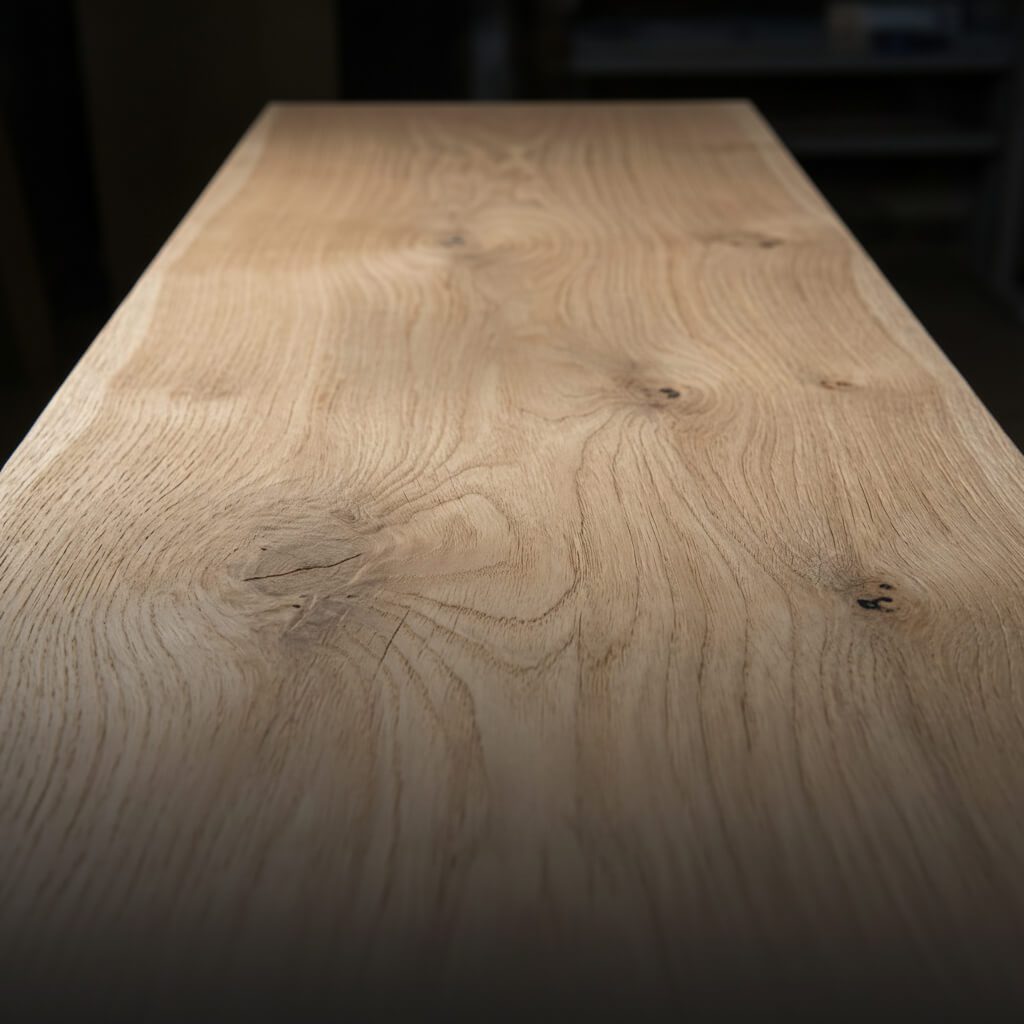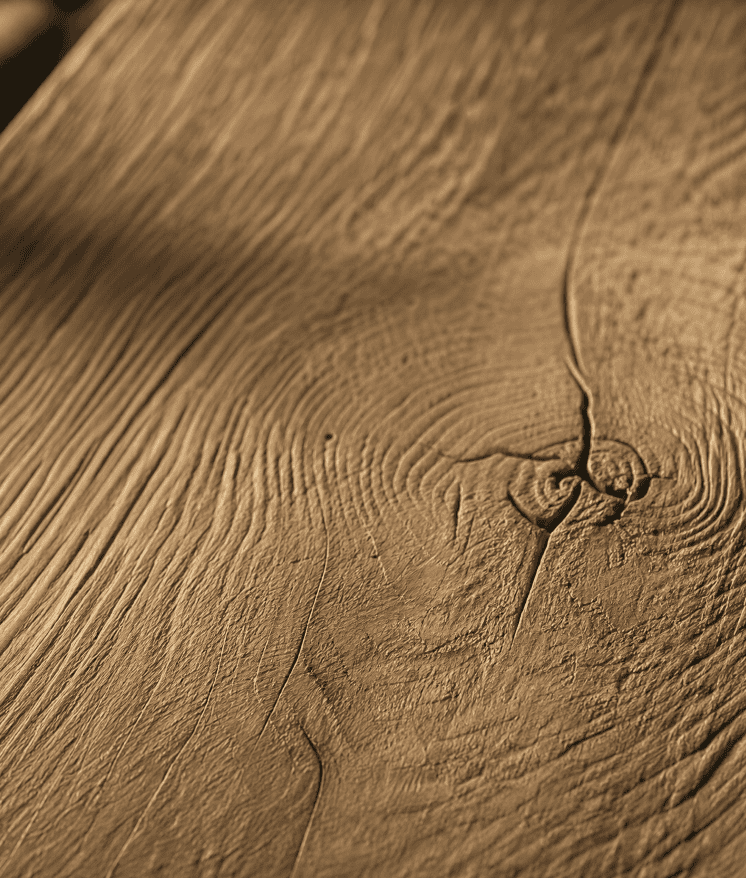
It is this complete process — not simply the age of the tree — that gives Vernay French Oak the consistency and working characteristics required for demanding architectural applications.
Timber is a natural material and will always respond to its environment. The objective is not to eliminate movement, but to understand and control it.
French Oak is recognised for its dimensional stability when correctly sawn, dried and conditioned. For flooring, wide boards, stairs and architectural joinery, this becomes particularly important where substantial dimensions, precision and long-term consistency are required.
Vernay’s oak is air dried for an extended period before controlled processing, allowing moisture to leave the timber gradually before it is prepared for its final application.
French Oak’s naturally high tannin content is one of its defining characteristics.
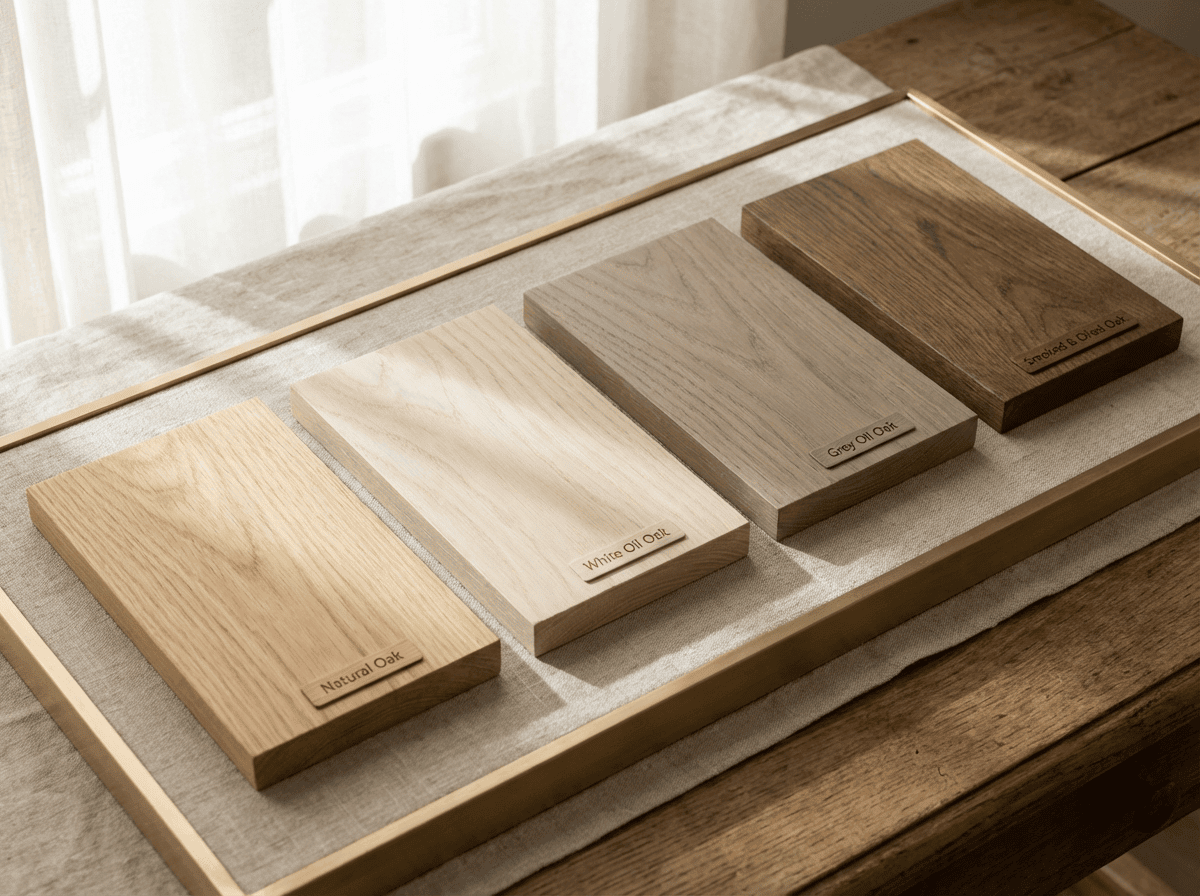
Combined with its grain structure, it responds exceptionally well to oils, stains, reactive treatments and smoking techniques, giving designers considerably greater control over colour while allowing the natural character of the timber to remain visible.
From pale, almost raw-looking finishes through warm natural tones to deeper smoked colours, French Oak provides an unusually broad finishing palette from a single species.
This means colour can be developed around the architecture rather than the architecture being designed around a limited timber colour.
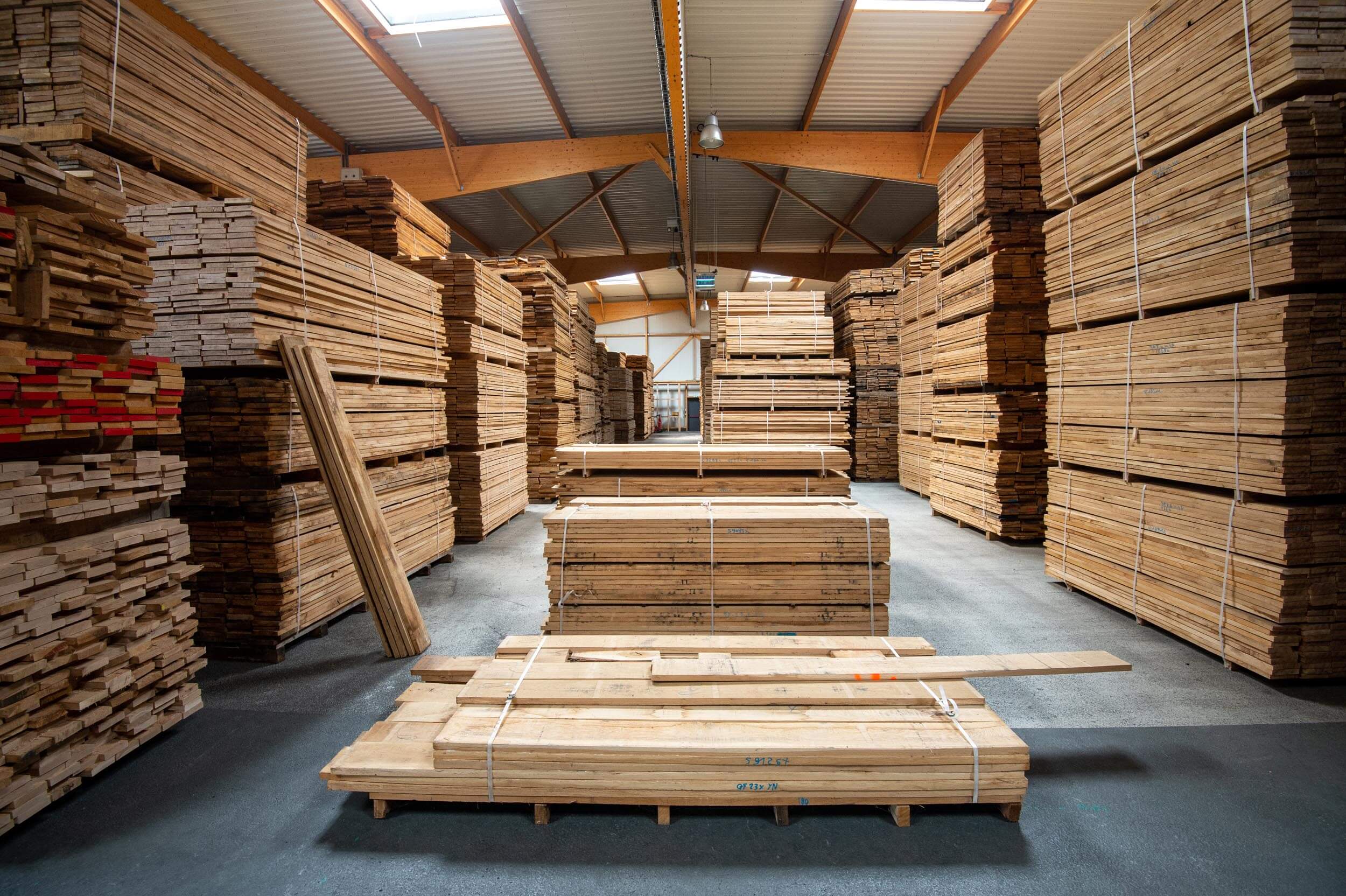
The maturity and scale of the French Oak resource allow Vernay to work with substantial sections and widths.
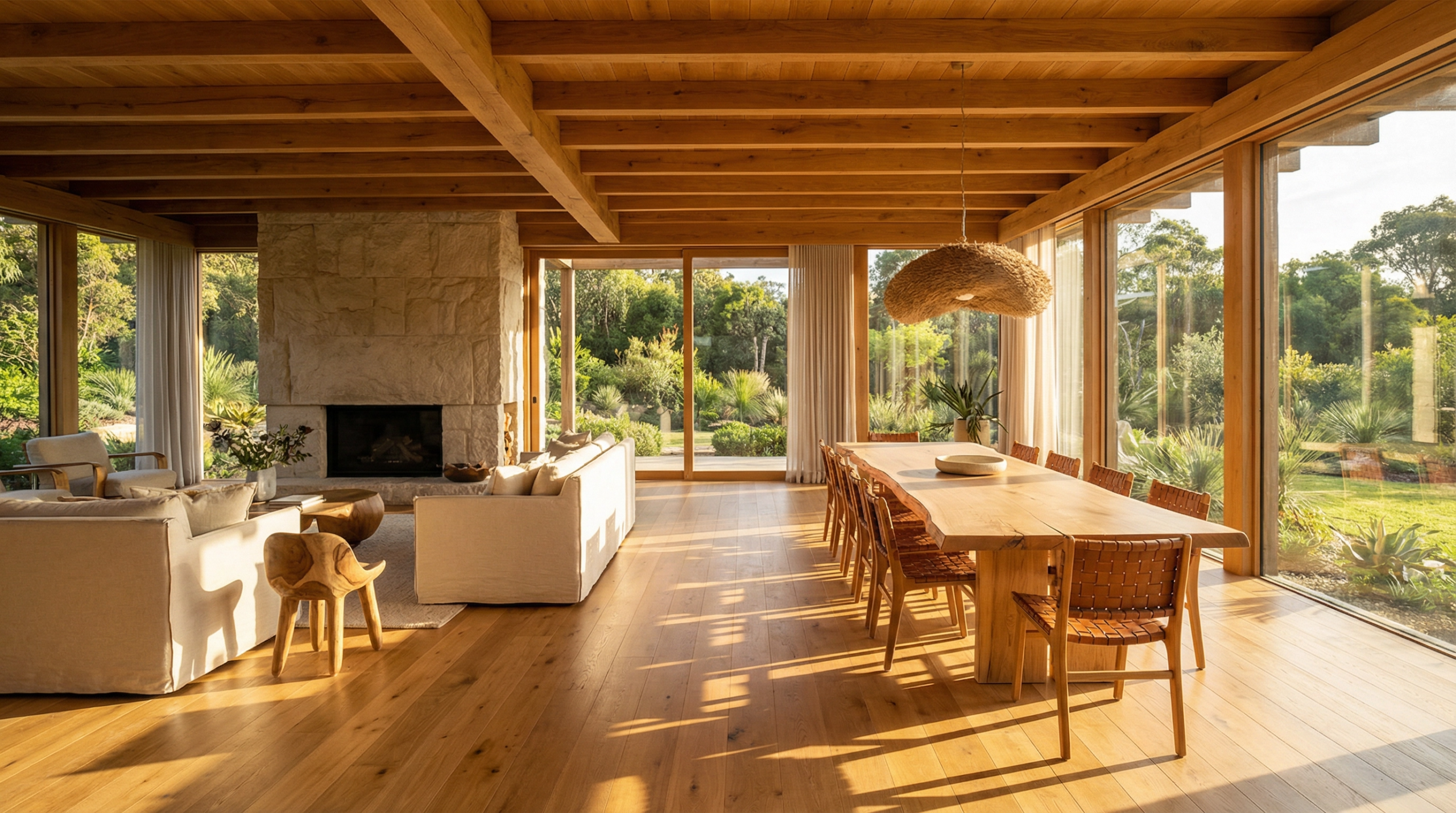
Wide-board flooring, stair components, wall and ceiling linings, joinery boards, beams, slabs and furniture can all be produced from the same material family.
Instead of specifying one timber for the floor, another for the stairs and another for the joinery, French Oak can become a continuous material language throughout the architecture.
They are not interchangeable materials — and they don’t need to be.
Australian hardwoods have their own distinctive qualities and architectural identity. French Oak provides architects and designers with a different combination of characteristics.
Vernay French Oak
Australian Hardwood
Character
Restrained, consistent grain with natural warmth
Often stronger variation in grain, colour and character between species
Stability
Well suited to precision architectural applications when correctly sawn, dried and conditioned
Varies significantly by species, cut, drying and application
Tannins
Naturally high tannin content
Varies considerably between species
Colour & finishing
Particularly receptive to oils, stains, smoking and reactive finishes
Finishing response varies by species and natural timber colour
Pale & blonde tones
Naturally suited to pale, blonde and neutral finishes
Strong underlying gold, brown, pink or red tones in many species can influence pale colour outcomes
Wide sections
Mature resource allows substantial widths and sections
Availability depends heavily on species and resource
Colour control
Broad finishing palette can be developed from one underlying species
Strong natural colour of some species can influence the achievable finish
Material continuity
One oak can extend across flooring, stairs, linings, joinery, beams and furniture
Multiple species or products may be required depending on application
French Oak doesn’t replace the role of Australian timber.
It offers architects another material choice — one shaped by its species, growing environment, maturity, tannin content and centuries of knowledge in drying, milling and working oak.
For Vernay, provenance isn’t simply knowing where the timber came from. It is understanding what has happened to that timber at every stage between the forest and the finished project.
For projects where stability, scale, colour control and material continuity matter, there is a reason French Oak has endured for centuries.
French oak. Without compromise.